
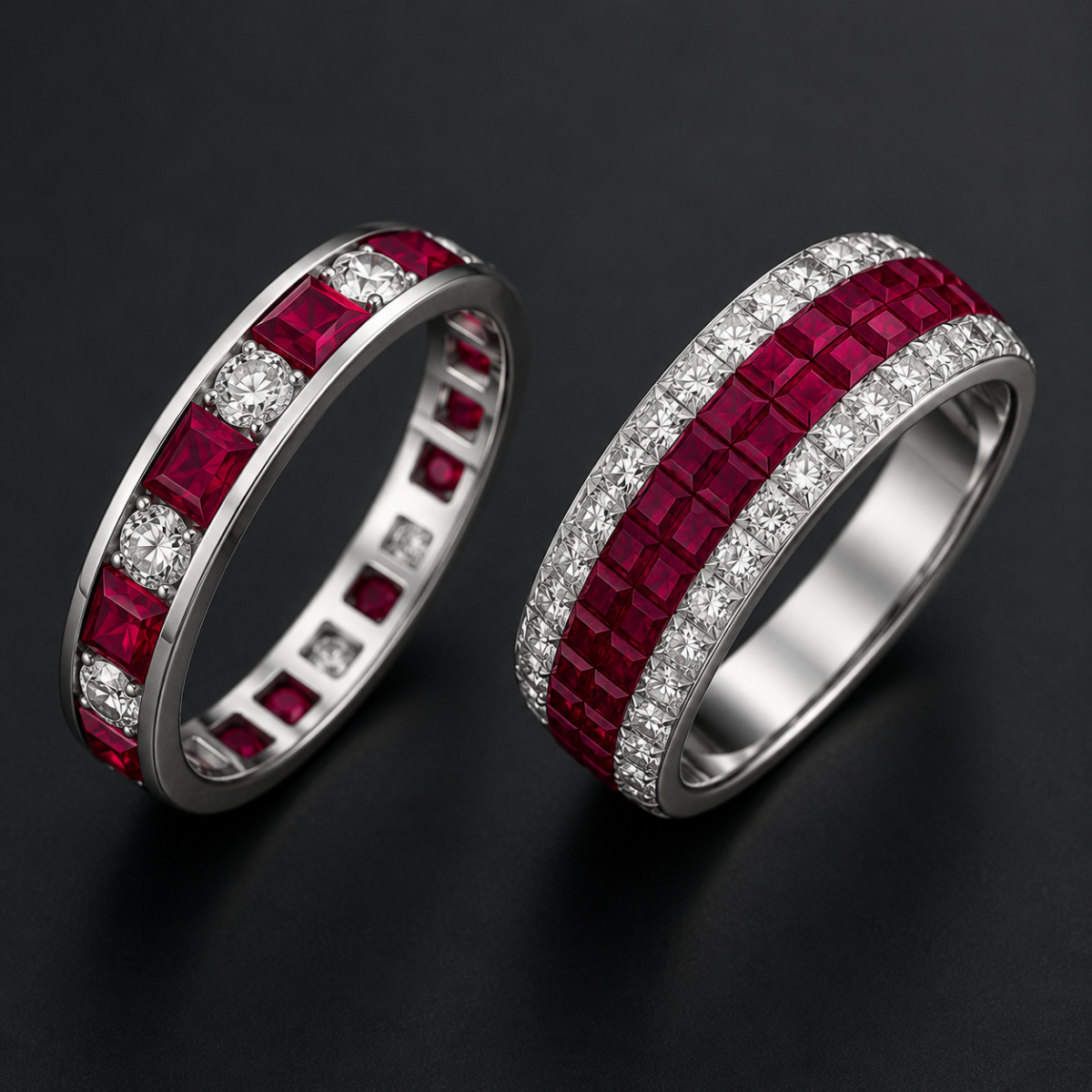
Have you wondered why two pieces of jewellery with similar gemstones look completely different? The answer lies not in the stones themselves, but in how they are set. Beyond securing a gem, different types of gemstone settings impact the brilliance, durability, appearance, and overall character of the gemstone making it look different. The choice of setting can transform the way the jewellery feels above all else.
Types of Gemstone Settings
Settings are chosen depending on the cost of the gemstone used, its size, weight and the metal that it is paired with. The category of the ornament, its style, the concept followed, the style and skill level of the maker are also considered. In this post, I will cover settings that are predominantly used in fine jewellery.

Prong setting
In the prong setting, small metal claws grip the gemstone at several points. Usually employing four or six prongs, this setting exposes much of the stone to light, maximising brilliance and making it appear larger. The trade-off is that exposed edges can be more vulnerable to knocks, and prongs require occasional maintenance.

A variation is the shared prong setting, where neighbouring stones share the same prongs. Common in eternity bands and tennis bracelets, it reduces visible metal and creates a seamless row of gemstones. The effect is elegant and open, though it demands precise craftsmanship because each stone depends partly on adjacent settings for support.
Bezel setting
The bezel setting takes the opposite approach. A strip of metal surrounds the gemstone’s girdle, holding it securely in place. There are two types of bezel settings – open and closed. Closed or full bezels offer excellent protection by covering the back as well as all sides, while open bezels leave the bottom of the stone exposed. Both bezels settings can be commonly seen in Indian fine jewellery.
Tension setting
The tension setting uses carefully engineered pressure to hold a stone between two ends of a metal mount, creating the illusion that the gemstone is floating. The tension can be on the horizontal or vertical axis.

Pavé setting
The pavé setting is designed to maximise sparkle. Tiny stones are set closely together and secured with minute beads of metal, creating a surface that appears almost entirely covered in gemstones. Because very little metal is visible, pavé settings produce a continuous glittering effect. In micro-pavé, extremely small stones are set under magnification to create a refined, highly detailed surface of sparkle.
In French pavé, V-shaped cuts are made beneath the stones. These openings allow additional light to enter from the sides and reduce the visual weight of the metal. The result is a brighter, more delicate appearance.
Related to pavé is the fishtail setting, identified by distinctive V-shaped metal cuts that resemble the tail of a fish. Popular in vintage-inspired jewellery, it combines security with intricate metalwork and creates a more decorative appearance than standard pavé.

Channel and bar setting
The channel setting secures stones between two parallel metal walls. The gems sit side by side in a continuous groove, with no visible prongs separating them. This produces a clean, streamlined appearance while protecting the stones from side impact making it more durable than the bar setting.
Bar setting separates each stone with vertical metal bars. The stones remain open to light from multiple directions, while the bars provide structure and definition. This creates a more architectural look than a channel setting and emphasises each gemstone individually.

Flush and Invisible
Similarly protective is the flush setting, where, the gemstone is sunk directly into the metal so that its surface sits level with or only slightly above the surrounding material. The result is sleek, modern, and highly resistant to wear, making it popular for contemporary jewellery and men’s pieces. In flush pavé, stones are set low into the metal while still creating a densely sparkling surface.
The invisible setting conceals all visible metal by fitting specially cut stones together on an internal framework, producing a seamless expanse of gems.
Apart from these, there are different types compound settings where multiple shapes of gemstones are set together as a cluster to create a solitaire like look. Types of Gemstone Settings such as Halo, trellis and trilogy settings are not about engineering but more about appeal. Choosing the correct gemstone settings is a design decision that shapes how a gemstone is seen, protected, and experienced.
I hope you find it interesting
Cheers


What do you think?