
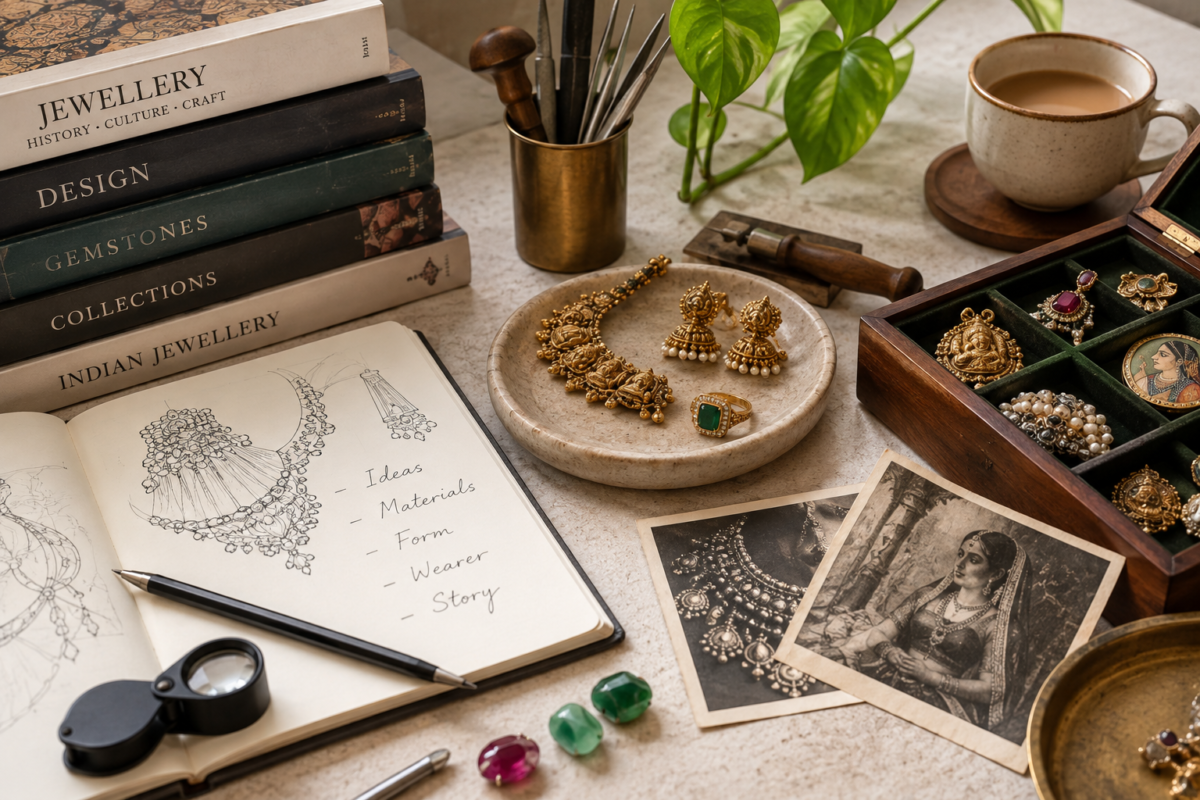
With regard to jewellery, I have referred to myself as an enthusiast, maker, collector, designer and researcher over the years depending on the role that I donned at that time. However, I see people use the titles liberally and interchangeably on Social media as though they mean the same. That irks me for they are different modes through which someone can engage with a jewellery object. There is a lot of difference between a maker, designer, researcher, collector and enthusiast that I will spell out in this post.
Who is a jewellery Enthusiast
An enthusiast experiences or appreciates jewellery, whether as an object and even as an image. They think, speak, read and write about jewellery but at the level of a novice. They buy jewellery for personal use and may occasionally design or make jewellery. They follow jewellery designers and brands and visit jewellery exhibitions and museums. They love reading about gemstones and types of jewellery but not from an academic perspective. They wear jewellery and experiment with styling. However, they do not make or design jewellery. Most people start as enthusiasts before moving to other roles.

How does a jewellery Collector organise
A collector intentionally builds a body of jewellery. The pieces are not bought randomly. There is a principle of selection, accumulation and preservation. It can be based on personal memories and likes or rarity or provenance. A collection might be organised around:
- A particular historical period (Victorian era)
- A region or community (Kashmiri jewellery)
- A material or technique (Kemp jewellery)
- A particular designer or brand
- A type of jewellery (A collection of earrings)
- A collection of gemstones or jewellery boxes
Dr. Sigrid Van Roode, an expert on the topic of jewellery collection has several free and paid resources on her website if you want to organise your collection.

What does a jewellery designer do
A designer conceptualises, researches, analyses and identifies or creates a solution. These solutions satisfy a feeling or desire, address a problem or improve an existing product or service. A jewellery designer follows a design process methodology. They apply the elements and principles of design to envision a piece, iterating concepts, materials, forms and even techniques. They think about the wearer and the viewer.
Becoming a designer requires training. It can be studying at a design institute plus job experience, assisting or apprenticing under another designer/ master maker or learning through years of practice. One cannot become a designer by watching a few tutorial videos. No, asking a maker to customise jewellery the way you want does not make you a designer either.
A designer does not necessarily make the final object. Especially in India, a jewellery designer might develop a design, create technical drawings and 3D models, specify materials and production methods, and then send the design to a goldsmith for fabrication. They might not be expert illustrators but know how to sketch jewellery as hand drawn sketches, CADs or both.

Who is a Maker
A maker materialises, produces or fabricates one or several pieces of jewellery. They may create an entire piece or participate as a job worker in a production run. A maker possesses tacit and embodied knowledge of materials, tools and processes. In India, hereditary craftspeople who are essentially makers are called artisans.
A designer workspace is studio or a maker’s workspace can be a studio or a workshop and a jeweller operates out of a jewellery store. They could be home based, set up inside a factory or belong in a retail space.
What does a Jeweller do
A jeweller’s role is to interface with everyone involved in the jewellery business – vendors, suppliers, designers, makers and clients. A jeweller’s shop or a jewellery shop/store is a placed where jewellery is sold. However, the store may include a workshop or studio where jewellery is designed and made. “Jeweller” is an epithet earned through years of experience, often earned by running a family business.
A jeweller need not necessarily design or make the jewellery they sell. They can distribute jewellery purchased from manufacturers or artisans or work with independent designers to commission pieces. Some jewellers offer consultancy services such as research consultancy, curation for galleries and museums, jewellery appraisal, jewellery cleaning and repair, gemstone suitability advice (gemstones for specific rasi), and procurement services.
Jewellery Historian
A jewellery historian is a specific kind of researcher, who studies the history of jewellery. They may study a particular genre, technique, material or period. This requires several years of independent or academic study such as a Postgraduate or a PhD degree. They write academic papers, journal articles, speak at seminars and even write books. Some researchers may also be makers or designers though it is not a requirement.

Combination modes of engagement with the jewellery object
The jewellery world has blending boundaries where the modes of engagement blur into each other. A designer-maker both conceptualises and physically produces the object. A collector-researcher creates archives of jewellery that become evidence for historical, cultural or material research. A design researcher focuses their research of design of jewellery. Their research is rooted in their practice of design and making.
Jewellery can be approached through many roles, each possessing a distinct relationship to the object. A designer conceptualises it, a maker materialises it, a researcher investigates it, a collector preserves it, and an enthusiast appreciates it. Understanding difference between a maker, designer, researcher, collector and enthusiast in the jewellery industry helps us recognise the different forms of knowledge, skill and engagement with jewellery.
I hope you find it interesting
Cheers

What do you think?