
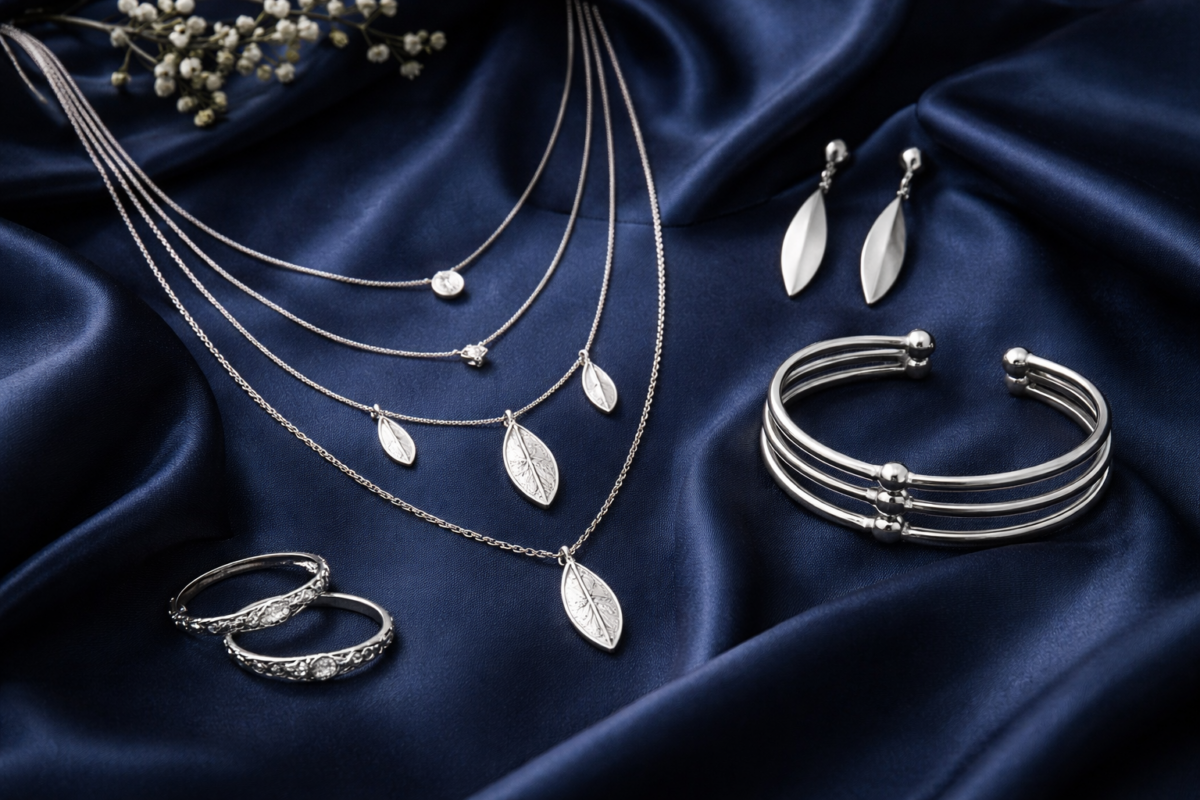
In India, gold has always reigned supreme, symbolising wealth, auspiciousness, purity and security. Silver, though deeply embedded in our cultural traditions, has often played second fiddle. It is seen more in the form of gifts, coins, vessels, or ritual objects than as fine jewellery. One reason is practical: silver is prone to oxidation, which causes it to tarnish easily. The West admires the aged patina of silver that tells a story through its soft grey tones. However, India tends to prefer our metals bright, gleaming, and mirror-like. Still, even with the ever rising prices silver is enjoying a strong renaissance and gold plated fine silver jewellery is increasingly grabbing a foothold over the bridal market.
Buying Silver for Akshaya Tritiya
Items that are white in colour are traditionally bought and gifted or donated on Akshaya Tritiya, the day of auspiciousness and growth. Doing so is believed to bless one with imperishable wealth. This festival associated with Lord Krishna, Goddess Lakshmi and Lord Parasurama falls on 19th April, in 2026. While white gold and platinum have been heavily promoted in the last two decades, silver has become popular due to its accessibility.
Silver today sits at the intersection of craftsmanship revival, contemporary fashion, and the sustainability discourse. Designers are increasingly treating silver not as an imitation of gold but as a material with its own visual language. One that cool-toned, expressive, and adaptable. For the modern Indian buyer, silver jewellery offers something gold increasingly cannot: everyday fashion without financial anxiety.
That being said , buying silver as investment is a whole different animal and I am not going to get into it. But if you are buying Silver for Akshaya Tritiya as decorative items or jewellery, here is what you need to know.

Silver alloys and purity
All silver is not the same and different categories of items have different purity requirements. For instance, silver vessels and other pooja items will have lesser silver content to make them more hardy.
1. Fine Silver (999 or 99.9% Silver)
Also known as pure silver, this variety contains 99.9% silver and is often marked 999. It is lustrous and hypoallergenic but relatively soft, making it less suited for intricate jewellery that faces daily wear. You will often find 999 silver used in coins, bars, and statement pieces like earrings or pendants where durability isn’t a major concern.
2. Sterling Silver (925 Silver)
The most popular form of silver used in jewellery, sterling silver is an alloy containing 92.5% silver and 7.5% copper and its alloys. This small addition strengthens the metal without compromising its shine. Most modern jewellery such as rings, bangles, and chains are crafted from 925 silver. There can be no “Pure Sterling Silver.” Listen to my rant here on Instagram.
3. Non-Tarnish Silver (Argentium, Sterilium, Silvadium)
Argentium contains 93.5% or 96% silver with a mix of germanium, zinc, boron, and copper. It is the most popular tarnish-resistant alloy for jewellery and suitable for everyday office and casual dressing though slightly expensive.
4. Karen Hill tribe Silver
Produced by the Karen Hilltribe people (between Thailand and Myanmar), this silver is 97%-99.5% pure. Though many designer sell them online, it is important to verify their claims of purity with certification. I used a few Karen Hill tribe silver pieces in my Sudya collection in 2013.
5. Coin Silver
Coin silver can contain anywhere from 60-90% silver depending on the purity of coins being melted to create jewellery. Though previously seen in Tibetan and Nepali gemstone jewellery, now it is used by Indian brands to sell new silver jewellery with an antique look.
6. German Silver (Nickel Silver) – NOT SILVER
Despite the name, German silver contains no actual silver. It is an alloy of copper, nickel, and zinc, valued for its silver-like appearance and affordability. Most “oxidised jewellery” available in Indian market is made of Iron or German Silver.

Plating
Sterling silver jewelry is often plated with a thin coat of 0.999 fine silver to give the items a shiny finish. This process is called “flashing”. Silver jewellery can also be plated with rhodium (for a bright, shiny look) and to resist tarnish.
Caring for Sterling Silver Jewellery/articles
Contrary to popular belief, wearing and handling your silver jewellery will impart it a velvetty sheen. So use it instead of keeping it the locker. Always store your sterling silver jewelry in tarnish prevention cloths or bags. The treated cloth slows down the tarnishing process and keeps the jewelry from rubbing against harder jewellery that might scratch it. If you prefer a bright and shiny look for your sterling silver, use a polish cloth to restore the jewelry to its original appearance.
Further do no dip any silver jewelry/articles in ‘dip’ solutions or commercial cleaning solutions even though it may say that it is for silver jewelry. Dip cleaners will work the first few times, but after that the silver jewellery may turn in color and will never look the same. And the gemstones in your silver jewellery may be damaged from the dip solution. I have tried this and learnt the hard way. Also do not use toothpaste for cleaning it as this will scratch the silver.
Resale and taxation
While I prefer that you buy silver items to use and enjoy and not just as “pure investment,” here is some information that can come in handy when you want to sell your silver in India.
In India, the tax treatment of silver depends largely on how the asset is classified under the Income Tax Act, 1961.
- Silver coins and bars are treated as capital assets.
Profits arising from their sale attract capital gains tax:- Held up to 24 months → Short-Term Capital Gains (STCG) taxed as per income slab.
- Held beyond 24 months → Long-Term Capital Gains (LTCG) taxed at applicable rates with indexation benefits (as per prevailing tax rules).
- Silver utensils and certain household articles, when used for personal or household purposes, may qualify as “personal effects.”
Personal effects are generally excluded from capital gains taxation, meaning gains from their sale may not be taxable. However, this exemption applies only when: the items are demonstrably for personal use, and not purchased primarily as investment assets.
Jewellery—whether gold or silver—is explicitly excluded from the definition of personal effects and therefore remains taxable on sale.
Tips to remember
Silver jewellery typically comes with high making charges beyond that of the metal price. Indian silver jewellery is often ornamented with a variety of stones and beads, the quality of which affects the look and the price. There is also a designer’s premium when you buy designer items. So even when weight differs due to a design change, the price might not change significantly. Therefore, buy, if really like what you see and enjoy wearing them. Keep your investments separate.
Hope you find it interesting
Cheers

What do you think?