
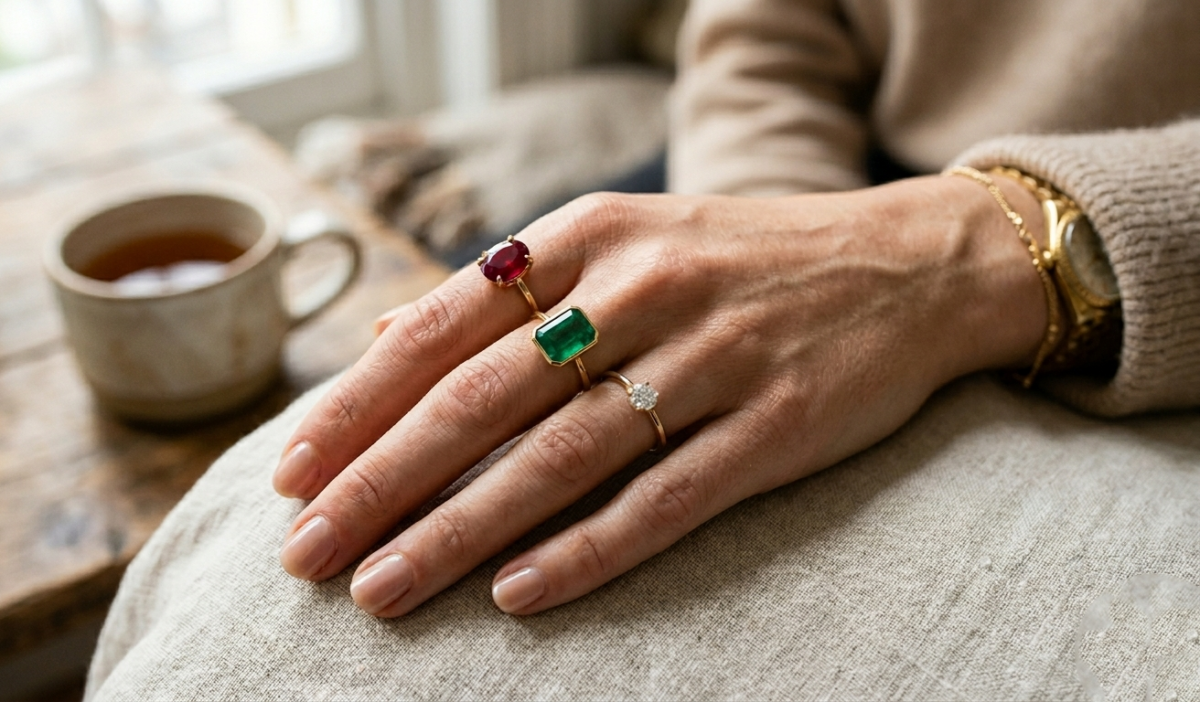
Recently Gregor B, the creator of Gemsize contacted me to discuss the way people compare gemstones. I thought about how we usually compare gemstones for rings by using Carat or size measurements. But do we ever compared the two together? More importantly, do we look at the specific gravity of each stone as we compare them?
Even then do we know exactly how big they will look on our finger when worn. Gregor, introduced me to Gemsize, a comparison engine where you can compare over 30 gemstones and understand how each of them will look on your finger.
Gemstones and specific Gravity
When people compare gemstones, one of the first numbers they look at is carat weight. But carats do not automatically tell you how large a stone will look. Carat is a unit of weight and equals 200 milligrams or 0.2 grams. Remember, weight, not size, meaning it measures how heavy a stone is, not how big it appears. Two gemstones of exactly the same weight and cut can look noticeably different in size. Why? Because size (what your eyes see) depends on more than weight alone. Enter Specific Gravity.
One of the most important factors affecting how large a gemstone appears for its carat weight is specific gravity (which is just a fancy way to say density). Specific gravity measures how heavy a material is compared to water. A gemstone with a high specific gravity will be denser than a gemstone with a low specific gravity. This means that a denser stone will be physically smaller than a less dense stone of the same weight. For example, a diamond has a specific gravity of 3.52 (it is 3.52 times heavier than water), while quartz is less dense with a specific gravity of 2.65. This means that a 1-carat diamond will be physically smaller than a 1-carat quartz, because quartz is less dense, so more volume is needed to reach the same weight. On the other hand, a ruby or sapphire (both with a specific gravity of 4) will look smaller than a diamond of the same weight.
To test it and see for myself, I compared an one carat oval diamond with an one carat oval emerald using the comparative engine available on the website.

Compare gemstones for rings
Simply put, higher density equals smaller size for the same carat weight. Think of it through the lens of the classic trick question: What is heavier – 1 kilogram of steel or 1 kilogram of feathers? I’m sure you know the answer. It’s neither; they weigh exactly the same. However, the steel is tightly packed and very dense (high specific gravity), and the feathers are all fluffy and full of air (low specific gravity). Therefore, you would need a lot more feathers by volume to reach 1 k than you would steel.
While the differences are not so extreme when it comes to gemstones, they do matter and should be taken into account. Another factor that plays a very important role in how large a gemstone appears is cut.
How shape affects size and appearance
I have spoken about how shape or cut impacts the appearance of a gemstones several times before on the blog. So I wanted to how to show it this time instead of describing it. An one carat pear diamond looks significantly larger that a one carat round diamond according to this calculator.

Do try out this free online tool to compare gemstones for rings. You can try different shapes, carat weighs, ring sizes and even skintone to pick the right stone.
Gregor B. is a seasoned web development professional with decades of experience building and refining digital tools. His deep interest in gemology led him to create unique online platforms where people can explore and compare the real-world sizes of gemstones directly on their screens.
I hope you find it interesting
Cheers


What do you think?